logologo

News and events archive

Filed under:Events
internet
anniversary
ETSIT
UPM

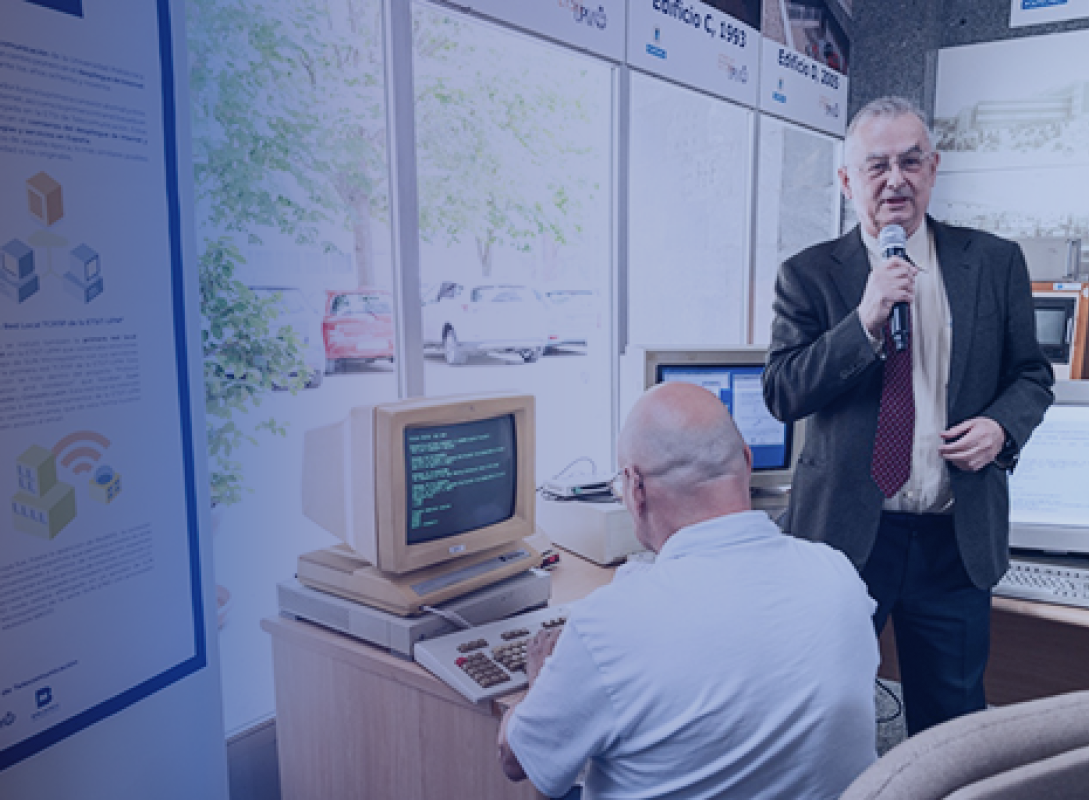
40 Internet Anniversary in Spain

12:30

2025-12-02

ETSIT UPM

The first internet connection in Spain was established in 1985 at the School of Telecommunication Engineering (ETSIT) of the Polytechnic University of Madrid (UPM). A test email sent over a TCP/IP network connected to the internet email service via EUnet—whose historical significance was unknown to its own protagonists at the time—marked the beginning of the expansion in Spain of what would soon become the network of networks.

The event commemorating this milestone will include the participation, via videoconference, of Americans Vinton Cerf and Robert Kahn, considered the fathers of the internet.

Agenda

12:30

Apertura institucional presidida por el rector de la UPM, Óscar García.

12:45

Charla del profesor emérito Juan Quemada sobre los primeros pasos en el despliegue de internet en España.

13:10

Diálogo por videoconferencia con Vinton Cerf y Robert Kahn, padres de internet, moderado por Juan Quemada.

13:45

Mesa redonda con pioneros españoles de internet moderada por el profesor emérito Juan Riera.

14:20

Inauguración de la sección sobre la historia de internet en España en el Museo de Telecomunicación de la ETSIT-UPM.

14:30

Cóctel

Filed under:Events
Cyberaula
award
educational innovation
escaperooms
artificial intelligence
UPM

The CyberAula Educational Innovation Group is one of the three groups awarded by the Universidad Politécnica de Madrid (UPM) in the 2024 Educational Innovation Awards. In this interview, the group highlights its most recent initiatives, mainly focused on improving teaching in subjects within the computer science area (escape rooms, games, AI-based tools, etc.), as well as its vision of educational innovation:

"It is true that this can require a considerable effort from teachers, especially at the beginning. However, this initial work can be seen as an investment that generates many benefits in the long term. Once new methodologies and tools are integrated and optimized, they tend to become more efficient and can even reduce the teaching workload, for example through automated assessment systems or reusable digital resources."

"Active methodologies, digital tools, and interactive resources usually generate greater interest and motivation among students, as they are closer to their habits and expectations in today’s context. (...) Students value activities that promote active participation, collaborative learning, and the practical application of knowledge. We have also seen that everything related to artificial intelligence (AI) is particularly appealing to them, so, for example, we have developed an AI-based multiple-choice question generation tool for the courses, and they have loved it."

"This feedback is very important to understand effectiveness and to make the necessary adjustments."